

Stunning coastlines, lots of sunshine, and consistent year-round waves make California a prime surf destination. This is bolstered by California’s legendary surf history and the endless number of amazing things to do and see in the Golden State.
Whether you’re discovering the hidden beaches of Malibu, hiking in Big Sur, or exploring the urban jungles of San Francisco and LA, California is rich with natural beauty and exciting places.
Surfing California

If you’ve never been to California, it’s probably much bigger than you think. From sunny palm-tree-framed beaches to snowy mountains, massive national parks and desert landscapes to sprawling cities, not only is California larger than many countries on the planet, it’s also an extremely diverse place.

With over 800 miles of coastline directly exposed to the Great Pacific and some of the most famous waves and surf towns in the world, it’s no wonder California has become one of the most surf-obsessed places on the planet.
Plenty of hype comes with plenty of crowds, but there are so many breaks along the coast that there are still some uncrowded gems to be found.
This guide to surfing California covers everything you need to plan an amazing surf trip—from regional breakdowns of the best waves to when to go, where to stay, how to get around, and more. Grab your boards and get ready to shred-the-gnar, because you are well on your way to the modern home of surfing.
Want to have the best surf trip to California?
We specialize in bespoke luxury surf trips to California, tailored to your surf level and preferences. Enjoy an expertly-planned surf vacation with insider surf intel, the best local surf coaches, stunning villas, talented private chefs, surf photography, and more. We’ve vetted and curated the crème de la crème in California and bring everything together to create dream surf getaways. Learn more.
Where to Surf in California

California is diverse as it is large, and there are vast differences between surfing up north and down south. To keep it simple, we’ve broken the state’s surf zones into Southern California, Central California, and Northern California.
Southern California

Stretching from Santa Barbara down to San Diego and the Mexican border, Southern California (also known as SoCal) is what many people have in mind when they think of California: Sunny beaches, palm trees, and sunshine. California Dreaming and all those other California-inspired songs are definitely referring to the southern part of the state, which is also home to Disneyland, Hollywood, Malibu, a huge chunk of the surf industry, and terrible traffic.
The Central Coast

The Central Coast technically spans from Ventura County in the south (just north of Los Angeles) to Santa Cruz in the north, but the surf world at large (and many Californians) consider Santa Barbara and Ventura Counties to be Southern California, so we’re going to run with that version. In this guide, what we refer to as the Central Coast stretches from San Luis Obispo County in the south to Santa Cruz in the north.
The Central Coast is much less populated than the south, full of quaint beach towns, rugged coastline, rolling hills, and remote beaches. It is home to the enchanting Big Sur, lots of wine country, the incredible Monterey Bay Aquarium, and a multitude of scenic drives.
Northern California

Northern California (also known as NorCal) stretches from San Francisco up to the Oregon border. This is California’s most rural and rugged region. The North Coast is so sparsely populated that there’s only one city north of San Francisco with a population over 100,000. The region is characterized by wild, often-inaccessible coastline, lush forests, and unruly surf. It is home to giant redwood trees, moody weather, large ocean wildlife, and more scenic coastal drives.

Just as the climate, culture, and landscape vary in the South, Central, and North Coasts, so does the surf and the overall surf experience. Surfing in sunny SoCal can feel a world away from the moody and gnarly breaks of the North Coast, so in the sections below we cover the surfing experience in each region of the state separately.
Since there’s a lot of coastline to explore in California, we recommend spending at least a full week in any given region if possible. A very popular itinerary is a surfing road trip along the Pacific Coast Highway between LA and San Francisco. There are tons of amazing spots along this stretch of coast, so the more time you have, the better.

For our recommendations on the best stops along the way, check out:
>> HIGHWAY 1 ROAD TRIP / A SURFER’S GUIDE TO THE CALIFORNIA COAST
You can also check out some of our personal trips at:
>> PCH SURF TRIP PART 1 / HUNTINGTON BEACH TO MORRO BAY
>> PCH SURF TRIP PART 2 / BIG SUR
If you want to see a lot of the coastline and don’t have three or four weeks to work with, you can still cover a lot of ground in 10 days or so, and at least get a little sample of this beautiful state. Just be prepared to be on the go quite a bit if you want to surf in multiple areas.
Surfing Southern California

Surf Seasons and Swell Info
This beautiful and well-populated region of the Pacific Coast is blessed with sunshine and swell year round. With the winter months (Dec-Feb) come colder water and northerly swells, which light up many of Southern California’s premier waves.
In the spring (Mar-May), northerly swells are still the predominant wave generators, although southerly swells start to mix things up in April and May. Plenty of onshore winds this time of year can put a damper on late morning or mid-day sessions, so getting it early or late is usually your best bet for the cleanest conditions.
In the summer (Jun-Aug), long period swells from the south start to pulse. The water temperature also warms up, transitioning from the cold to cool range, and full-on tourist season kicks into gear, with travelers and locals alike taking the beaches by storm. Again, onshore winds are common in the afternoons, so look for lighter wind forecasts and plan accordingly. If you score a good south swell with sunshine and light winds all day long, you’re scoring Southern California at its finest.
In the fall (Sep-Nov), a combination of south swells, north swells, and frequent all-day offshore winds make for some magical conditions. The sea temps are still pretty warm in Sept and Oct, although it starts to get colder in Nov.
Types of Surf Breaks
Southern California has a little bit of everything on offer, from reef breaks to beach breaks, point breaks to jetties, and a couple very serious shorebreaks.
Level of Difficulty
Whether you’re a first-timer or a seasoned pro, you’ll be able to find suitable waves in just about any part of SoCal.

Counties
San Diego, Orange County, Los Angeles, Ventura, Santa Barbara
Crowds
You better believe it. All of the best and most well-known breaks will be packed with 15–50+ surfers when the waves are good. However, on average swells and at scattered beach breaks, you can often find your own peak and surf by yourself (or at least with a mellow crowd).
It helps to be able to surf during the normal business hours of 8:00 am to 4:00 pm, while a lot of people are working day jobs. There are also generally fewer crowds during the winter months.

Water Temperature
The ocean temperature in So Cal ranges from 52 F (11 C) on the coldest winter days to 74 F (23 C) during the warmest summers. The summer of 2018 was a record-breaking season with highs in the 76-78 F range. Southern California fluctuates a bit more than up north, so it’s good to have some options when it comes to wetsuits. A quality 3/2 mm for colder days and a 2 mm wetsuit top or spring suit for warmer days will get you by most years. If you like to be toasty warm and plan to surf in the middle of winter, a 4/3 mm suit and booties are nice to have for cold morning and evening sessions.
Getting to the Surf
Renting a car or campervan is the best option, as there are a lot of surf breaks you’ll want to hit between Santa Barbara and San Diego, which is about a three- to four-hour drive (without traffic), with dozens upon dozens of breaks to check out.
Top Surf Spots in Southern California

Rincon (Santa Barbara / Ventura): Located on the county line between Santa Barbara and Ventura, Rincon is often referred to as the Queen of the Coast. The wave is a long, beautiful, right-hand point break with the perfect pace. Late fall, winter, and early spring are your best windows to catch her in all her glory. Barrel sections are on offer with a decent size NW swell and mid to lower tide, but Rincon works on all tides. Easterly winds are offshore.
Malibu (Los Angeles): Another perfect right-hand point break, Malibu is a hotdogging summer break. Always crowded and very popular with the longboarders, Malibu is not where you want to surf if you’re looking to avoid the masses, but it’s as good as noseriding gets if you can handle the crowd. It doesn’t rain very often in the summer, but if it does, you probably shouldn’t go in the water here, as the runoff could make you sick.
Trestles (San Diego / South Orange County): While Trestles is technically located in San Diego County, it’s commonly considered to be a part of San Clemente/South Orange County, since it’s separated from the rest of North County San Diego by the military base Camp Pendleton. This beautiful collection of surf breaks consists of the world-famous Lowers, plus many other awesome waves like Uppers, Middles, Cottons, Church, and San Onofre State Beach/Old Man’s. With a variety of super rippable lefts and rights on offer, there are a lot of options. Lowers is the best wave of the bunch and often full of local rippers and pros, so the competition is stiff if you’re not at that level. Uppers and Middles are a bit less aggro, although still quite competitive.
Surfing Central California

Surf Seasons and Swell Info
Fall, winter, and spring are the best seasons to surf Central California, when northwest swells are very common. But you can also find some breaks that pick up south swells and get decent surf in the summer.
Types of Surf Breaks
Spooky reef breaks, thumping beach breaks, and the breathtaking setups of Big Sur make Central California a very special place.
Level of Difficulty
Mostly intermediate to advanced, but there are some inside peaks and tamer breaks for beginning surfers. There’s a lot of open-water energy and power on tap in Central California. You should know your way around a competitive, localized lineup and be able to handle yourself in stronger surf.

Counties
Santa Cruz, Monterey, San Luis Obispo
Crowds
Most popular breaks within the Santa Cruz area will typically have a decent crowd on it, but you can easily find solitude outside of town if that’s what you seek. It will just be you and whatever might be lurking beneath the ocean surface.
Water Temperature
Basically the same as Northern California, with a couple of slightly warmer pockets here and there during the warmest times of the year. Temperatures range from about 48–62 F (9–17 C), with average temps running in the 50–54 F (10–12 C) range.
Getting to the Surf
Renting a car is best. Surf breaks are often quite spread out from county to county, so you’ll definitely need your own set of wheels.
Top Surf Spots in Central California

Steamer Lane (Santa Cruz): Heavy, shifty, rock reef break with several peaks depending on the size of the swell. Can handle triple overhead waves. NW winds are the best.
Pleasure Point (Santa Cruz): There are a variety of peaks to pick from along this little stretch of coast, but the main wave at Pleasure Point is a somewhat rolling and sectiony right, with a punchier, sometimes hollow left breaking off the main peak. It’s typically pretty crowded, as it’s a popular spot for all levels of surfers on all types of surfboards.
Morro Bay (San Luis Obispo): Sand-bottom beach break with a variety of peaks to choose from. Usually both lefts and rights on offer. A long stretch of beach to spread out a bit and explore if it’s too crowded at the main peaks. Works on most tides and swell directions. Easterly winds are offshore.
Surfing Northern California

Surf Seasons and Swell Info
Certain breaks work year-round, but fall, winter, and spring are your best bet for size and consistency, as there are plenty of swells with north and west in them. It’s likely to be a wet, cold, and rugged adventure, so be prepared and bring plenty of rubber.
Types of Surf Breaks
From super heavy beach breaks like Ocean Beach and Salmon Creek to rugged and picturesque rocky reef points in less-visited areas, this raw and unspoiled region of California is best suited for the adventurous type.
Level of Difficulty
Upper-level intermediate to expert. Between navigating uncharted coastlines, dealing with localization, and handling powerful surf, you’ll be best off with some solid surf experience under your belt and a good understanding of proper surf etiquette in this neck of the woods.

Counties
San Mateo, San Francisco, Marin, Humboldt, Mendocino, Sonoma, Del Norte

Epic surf trips made easy.
Explore luxury done-for-you surf vacations with Lush Palm Private Retreats.
Crowds
It depends on when and where you go and how the conditions are. At many of the best and most popular spots, despite the presence of terrifyingly large great white sharks, brain-chilling water, and overall gnarly conditions, it can still get busy out there at times. However, you can definitely find uncrowded breaks if you go searching for them.
Water Temperature
It’s typically cold, really cold, or really, really, cold. Temperatures range from about 48–62 F (9–16 C), with average temps running in the 50–54 F (10–12 C) range. You’ll probably want to wear a quality 4/3 mm or 5mm winter wetsuit most of the time, as well as booties and a hoodie if you want to stay comfortable.
Getting to the Surf
Rent a car and use Google Maps—or, better yet, abandon technology, pick up an old school road atlas, and explore this wild surfing frontier.
Top Surf Spots in Northern California

Ocean Beach (San Francisco): World-renowned beach break known for its heavy, raw, open-water power. All sorts of peaks can be surfed up and down this three-mile stretch of coast. Be careful of strong currents, rips, and fast-building swells.
Maverick’s (San Mateo): Famous deep-water big wave surf break about 25 miles south of San Francisco in Half Moon Bay. Very serious wave for trained experts and pros only. Needs a big swell to break and is very dangerous.
Point Arena (Mendocino): Hailed as one of the best breaks north of San Francisco, this often hollow and heavy left-hand rock reef break works best on a mid-tide, with a decent size swell and north to northeast winds.
Surf Trip Logistics in California

While California’s waves are pretty easy to find, being directly off of California’s world-famous Pacific Coast Highway (Highway 1), having a local surf guide to show you around and get you dialed in with the winds and tides is always a good idea. Also, as many breaks are spread out, even in local hubs, having a car always comes in handy.

For those seeking a high-end luxury experience, the sky’s the limit. With a seemingly endless selection of top-notch restaurants, wineries, spas, luxury hotels, shopping centers, amusement parks, and all sorts of fun things to do, you’ll find no shortage of world-class activities and experiences to indulge in.
Where to Stay

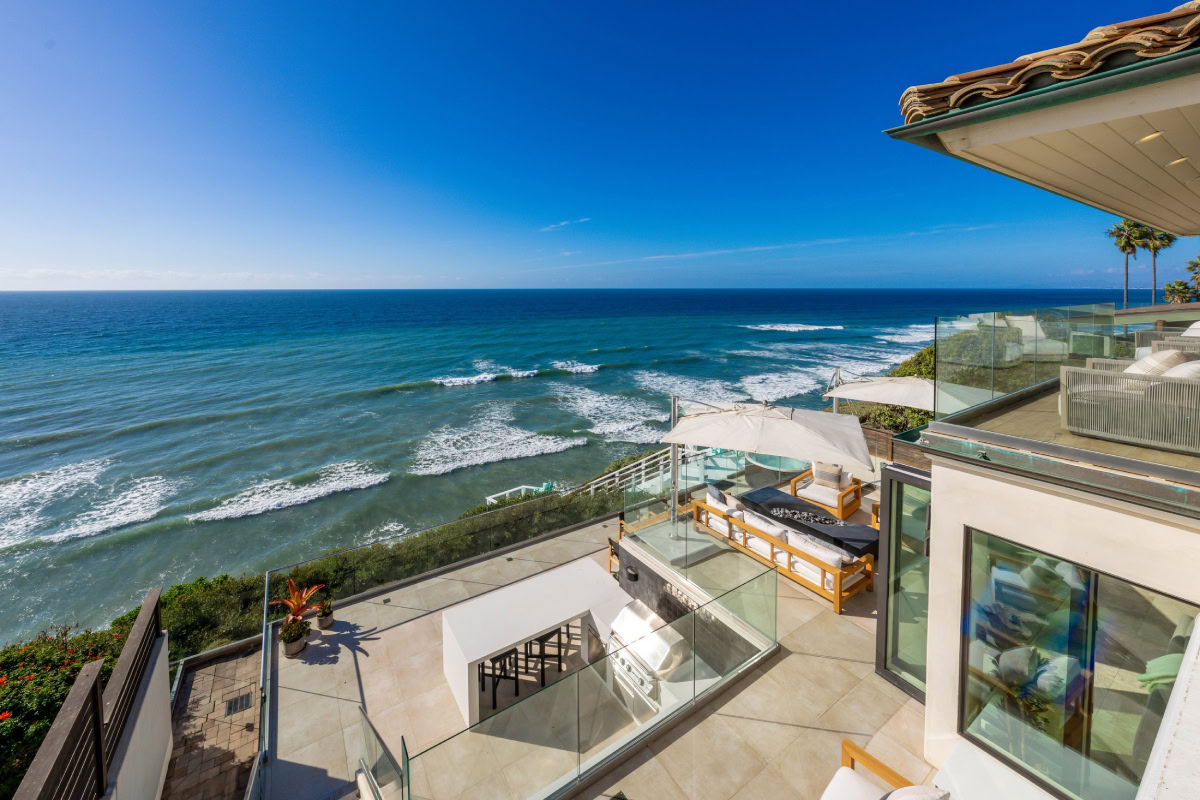
California’s coastline is littered with incredible places to stay. From boutique surf hotels with curated amenities to luxury beachfront villas where you can fall asleep to the sound of the waves, there’s no shortage of stunning accommodations to suit your own personal style and preferences.
At Lush Palm, we specialize in bespoke luxury surf trips to California, tailored to your surf level and preferences. Enjoy a five-star surf vacation with insider surf intel, the best local surf coaches, stunning oceanfront villas, talented private chefs, surf photography, and more. We’ve vetted and curated the best that coastal California has to offer and brought everything together to create dream surf getaways. Get in touch here to start planning your trip.
Below are just a few of the many stunning properties we have available for your surf vacation in California. We hand-pick properties based on design, amenities, and proximity to surf breaks.


California Travel Basics

Seasons and Weather: It’s no secret that California has excellent weather most of the time. The climate along the California coast is very temperate, with air temps typically ranging from the mid-50s to the mid-70s F (13–24 C).
Each region has its own local weather nuances, and it’s usually quite a bit cooler in Central and Northern California than it is in Southern California. That being said, you can enjoy beautiful weather in any region along the California coast almost any time of year.
On the coast, it typically won’t get much hotter than the mid-80s F (30 C) in the summer, with the hottest months usually being late June through September. In the winter, it typically doesn’t get colder than the mid-30s F (2 C) on the coldest nights, with most nights in the 40s to 50s F (6–15 C) in the central and northern regions and the low 60s F (17 C) in Southern California.
However, if you drive only 15 minutes inland from any given stretch of coast on a hot summer day, it is possible to find the temperatures jumping 10–15 degrees (sometimes up into the low 100s F, depending on where you are in the state). These heat waves usually only happen for around two to four sporadic weeks per year, typically between June and September).

If you’re not familiar with California’s various weather moods, then you might want to get acquainted with some common Californian terms, like May Grey and June Gloom.
The terms May Grey and June Gloom mostly apply to SoCal weather, as Central and Northern Californians are a bit more accustomed to foggy and cloudy days than the population down south. Essentially, during these two months, it can sometimes be foggy or cloudy in the morning and evening hours (sometimes all day), with a marine layer caused by the cool water and warm air reacting to each other.
Some years it’s cloudier than others, and there’s always the slight possibility of running into a full week of cloudy weather even in July and August. For the most part, however, you can usually count on getting pretty magnificent weather in sunny ol’ California.
Tipping: (If you’re from the US, feel free to skip this section. For those who aren’t, the following is a brief breakdown of the US tipping system.)
The general rule of thumb in the US is to tip generously and often. Unlike many countries, the minimum wage for “tipped employees” in the US can be very low at times, so they make the majority of their income from tips. Also unlike many other parts of the world, the total cost of table service is almost never included in the bill, leaving it up to you to be a good tourist and leave a decent tip (provided you had good service).
There are a couple of situations where gratuity is already added to the bill—typically when you have a table of six or more guests, and in some restaurants in heavily touristed areas. Usually, a good server will let you know when the tip is already added to the bill (in the rare case that it is), but you can also check yourself, as your bill will say “Gratuity” or “Service Charge” with an amount next to it. Additional tipping is not expected if you see “Gratuity” or “Service Charge” on your bill.
At all sit-down restaurants with table service, the norm is to tip 15–25% of the total bill. That being said, if you enjoy good service, it is common to tip 20%. You’re not expected to tip at fast-food restaurants or when you order at a counter (like at a coffee shop), but most coffee shops will often have a little tip jar, and it’s nice to leave a little something. At bars, depending on the situation, it’s customary to tip $1 per drink or 15–20% of the total bill. For taxis, most people tip 10–15%. For valet parking, $2–5 tips are common. For a spa treatment or hairdresser, most people tip 10–20%.

Staying Connected: Always double check, but pretty much every hotel, vacation rental, and villa will have free Wi-Fi included in your accommodation. Many coffee shops and public places will also have free Wi-Fi available.
If you don’t have a US mobile plan, you can pick up a prepaid SIM card for your trip. Your phone just needs to be “unlocked,” meaning that it’s not tied to a certain carrier’s network and can work with more than one service provider. T-Mobile offers a tourist plan that includes three weeks of talk, text, and data for $30.
Good to Know: Summer kicks into full swing in early June, when kids are out of school and everybody is taking their summer vacations, so June through early September is the busiest time of year in California. If you want to avoid the masses at the beach, visit either before June or after the middle of September.
Eat & Drink

California is a melting pot of cultures, and this is reflected in the local food options. There are incredible restaurants offering every type of cuisine—Chinese, Italian, Mexican, Thai, and everything in between. In the larger cities like San Francisco, certain neighborhoods such as Chinatown are legendary for their regional specialties.
With Mexico being the state’s southern neighbor, many Californians are obsessed with Mexican food and eat their fair share of tacos, burritos, and salsa. Avocados are also a local favorite and found on many California menus.
“Californian cuisine” is influenced by many cultures, but typically involves fresh, locally sourced ingredients and seafood.

Californians are some of the most health-conscious people in the US, so there are a ton of health restaurants and menu items catering to every type of eater in existence, including vegan, gluten-free, paleo, raw, etc. In addition, most restaurants are happy to cater to your specific diet.
California is also a craft beer paradise, so if you’re into craft beer, you’ll find an endless supply of amazing brews to sample. San Diego has an especially high density of craft breweries, but you can find top-notch craft beer all over the state.
California’s dining scene is as diverse as its coastline, with everything from casual taco shops to upscale, oceanfront restaurants. If you’re staying in a private villa or vacation rental, consider hiring a private chef to enjoy fresh, seasonal meals at home—perfect for a post-surf feast.
For dining out, you’ll find plenty of incredible options, especially in trendy towns like Malibu, Santa Barbara, and Encinitas. Be sure to try the local seafood, and don’t overlook neighborhood favorites and small taco shops for a classic California breakfast burrito or fresh fish tacos.
If fine dining is your thing, you’ll find no shortage of world-class restaurants serving everything from farm-to-table cuisine to fresh takes on international flavors. Whatever your preferred style, California’s food scene is sure to impress.
Transportation

The best way to get around California is definitely by car, especially if you’re looking to surf. California doesn’t have great public transportation, so while you can take the train along the coast, hire an Uber driver, or use trams and trolleys to get around in some cities, you’ll typically need your own set of wheels to have any freedom and flexibility.
California doesn’t have many toll roads (and they’re usually optional) so you don’t have major tolls to consider when driving long distances.
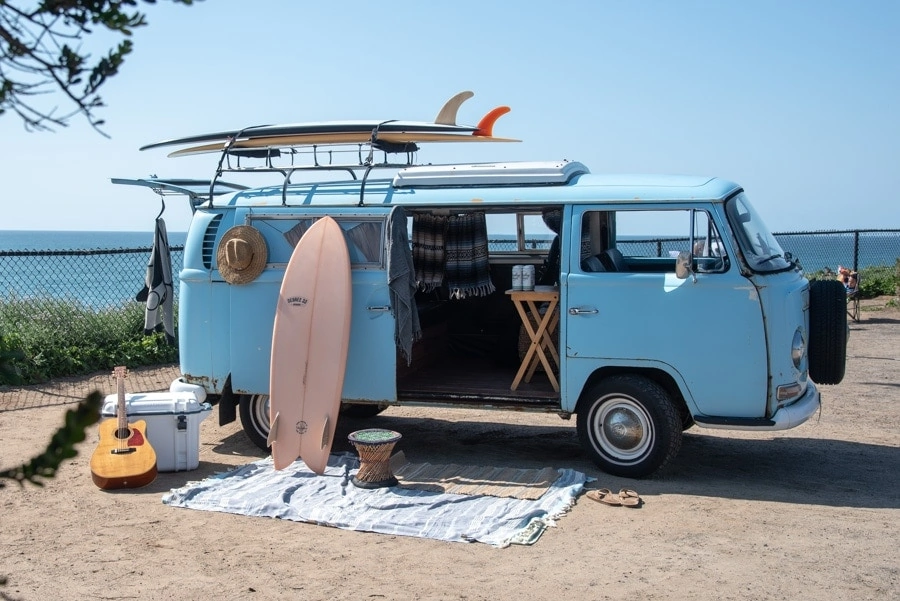
For an elevated surf trip, consider renting a comfortable SUV to handle any gear and enjoy a smooth ride down coastal routes. And if you’re looking for something unique, a campervan rental can be an unforgettable way to experience California’s stunning coastline. Picture yourself waking up with views of the Pacific Ocean before heading out to surf—it doesn’t get much better than that.
Get the lowdown on the best California Campervan Rentals >>

Things To Do in California
(besides surfing)

Coastal Cruising and Scenic Drives
Take a road trip along the Pacific Coast Highway for one of the most iconic coastal drives in the world. Cruise past rugged cliffs, sandy coves, and seaside towns from San Diego all the way to Northern California.
Scenic Coastal Hikes
California’s coastline is lined with breathtaking trails and state parks. Hike along Point Lobos near Big Sur, Torrey Pines in San Diego, or El Matador in Malibu for ocean views, sea cliffs, and wildflowers. Sunset hikes are especially magical.
Wine Country Wandering
Take a break from the beach and head inland for a wine tasting experience. Whether you’re exploring Santa Barbara Wine Country, Paso Robles, or even Temecula, you’ll find laid-back tasting rooms, vineyard tours, and award-winning California wines just a short drive from the coast.
Whale Watching and Ocean Tours
From Monterey to Dana Point, California is one of the best places in the world for whale watching, with seasonal sightings of gray whales, humpbacks, and even blue whales. Join a catamaran or zodiac tour for an up-close experience with dolphins, sea lions, and other marine life.
Tide Pools and Rock Formations
Explore natural tide pools at Swamis in Encinitas, Fitzgerald Marine Reserve near Half Moon Bay, or Crystal Cove in Orange County. These areas are rich with marine life—perfect for a mellow, curious afternoon along the shore.
Yoga and Wellness by the Sea
California is a hub for wellness culture, with beachside yoga, spa retreats, and sound baths found in artsy towns like Ojai, Malibu, and Encinitas. Whether you opt for a drop-in class or a full-day wellness experience, it’s the perfect balance to a day in the sun.
Skateparks and Surf Culture
If you love skate and surf culture, dive into the local skate scene or visit iconic landmarks like the Venice Beach Skatepark, Surfing Heritage Museum in San Clemente, or Santa Cruz Surfing Museum. These spots celebrate California’s deep roots in surf and skate history.
Horseback Riding on the Beach
In select areas like Santa Barbara, Half Moon Bay, and Morro Bay, you can go horseback riding along the coastline—an unforgettable way to take in the scenery and get off the beaten path.
Explore Seaside Towns and Local Eats
Each California surf town has its own vibe, and artisan coffee shops, organic cafes, boutique shops, and farmers markets abound. Spend an afternoon exploring cultural hubs like Carmel-by-the-Sea, Laguna Beach, or Leucadia, then finish the day by enjoying fish tacos with an ocean view.
Stand-Up Paddleboarding and Kayaking
Paddle the calm waters of La Jolla Cove, Monterey Bay, or Morro Bay for a relaxed way to experience California’s marine life. Keep an eye out for sea otters, dolphins, and seals along the way.
FAQs
Is California safe? While a few inner-city areas in California have a reputation for gang-related activity, most coastal towns are incredibly safe and welcoming. As with any travel, however, it is a good idea to keep valuables locked up.
Is California a family friendly destination? California is one of the best family friendly destinations on the planet, with an endless supply of activities for everyone, including beaches, hikes, amusement parks, water parks, and virtually anything else you can think of.
What’s the best time of year to surf in California? It really depends on what you’re chasing. California serves up quality waves year-round, but fall is widely considered the golden season. From September through November, you get that magic combo of possible offshore mornings, pleasant weather, and a blend of northern and southern swells that light up breaks up and down the coast. If warm water is at the top of your wishlist, late summer is your sweet spot. August and early September typically bring the toastiest ocean temps of the year, paired with fun, reliable surf—perfect for long beach days and consistent sessions.
Are there options for beginner surfers in California? There are tons of beginner spots and user-friendly waves in California, especially down south, where many of the waves are long, soft point breaks. The biggest challenge for most beginners will be the crowds, which can be a bit intimidating for some. Which is why it is always ideal to go with a local guide or surf instructor.
Where should I stay in California for surfing? Everywhere in California is beautiful and has its own set of perks, so it really depends what experience you are looking for. Some people love the busy, warm SoCal vibe, others love the solitude of NorCal, and still others enjoy the in-between experience of the Central Coast. With nearly 850 miles of coastline, it’s just a matter of finding what you enjoy and posting up!
Travel Insurance

While we’d rather not think about getting injured while traveling, there are too many cases of people who didn’t think about insurance and get nailed with crazy medical bills after the matter.
You know the deal—better safe than sorry. Battleface or World Nomads Insurance offer very comprehensive travel insurance and cover lots of activities, including surfing and ocean sports. You can easily check them out and get a fast quote below.
Get a battleface Insurance Quote >>
Get a World Nomads Insurance Quote >>

We hope this guide to surfing California helps you plan an amazing trip to the Golden State! We’re based in north San Diego (Encinitas) and have taken lots of trips all over California, so if you have any specific questions, feel free to reach out in the comments below and we’ll do our best to get you the answers you need.
We also have multiple other articles and guides on California, so type “California” into our search tool in the sidebar, or check out a few of our related posts below. Happy travels!



Such an informative and well-detailed post all on one page! A great guide to have handy and bookmarked. I really appreciate finding your post at this exact moment as I have been looking for great places to surf in California. Thanks!
Awesome, Scott. Happy to help! Cheers
You have really helped me by giving the valuable information through this blog. Thanks and keep sharing this kind of information.
Thanks for your feedback, Warren. Stoked we can help! Cheers
Hi There,
I’m planning my first ever trip to the US and don’t want to miss the surf.
So I’m trying to go from Los Angeles all the way up to San Francisco.
For like 3 weeks. I’m an intermediate surfer, so basically means paddle out / paddle in / take off / first turns is easy for me . So my question is, if I’ll be able to have some fun sessions in California even if I’m not a pro ? 🙂
And if there are some schools or if the locals could give some advises . 🙂
Would be really glad to hear from you!
Cheers and greetings from Germany,
Phil
Hi Phil,
Greetings from California 🙂 Sounds like a super fun trip! You will absolutely have a great time surfing in California as an intermediate surfer. California’s waves are generally very user-friendly, so you won’t have a problem!
Honestly, if you’re comfortable in the water, you probably don’t need a guide or surf school. Many surf breaks are relatively easy and typically you’re not dealing with any big dangers like super shallow reef or crazy barreling waves. As long as you practice good surf etiquette you should be good to go.
If you still feel you want to hire a local guide, we have a couple of recommendations for surf guides in Encinitas and Ventura if you’re interested. And there are lots of surf schools all along the coast.
For more info on traveling in California, just search ‘California’ on our site and we have a lot of great resources for your trip. Hope you have a wonderful trip up the coast! Cheers
The Central Coast of California has to be the most underrated place on the planet, or at least in California. I would highly recommend getting up to visit and explore the San Luis Obispo are as soon as you can. Thank you for a great article!